START WEAVING DOUBLEWEAVE WITH STRIPES
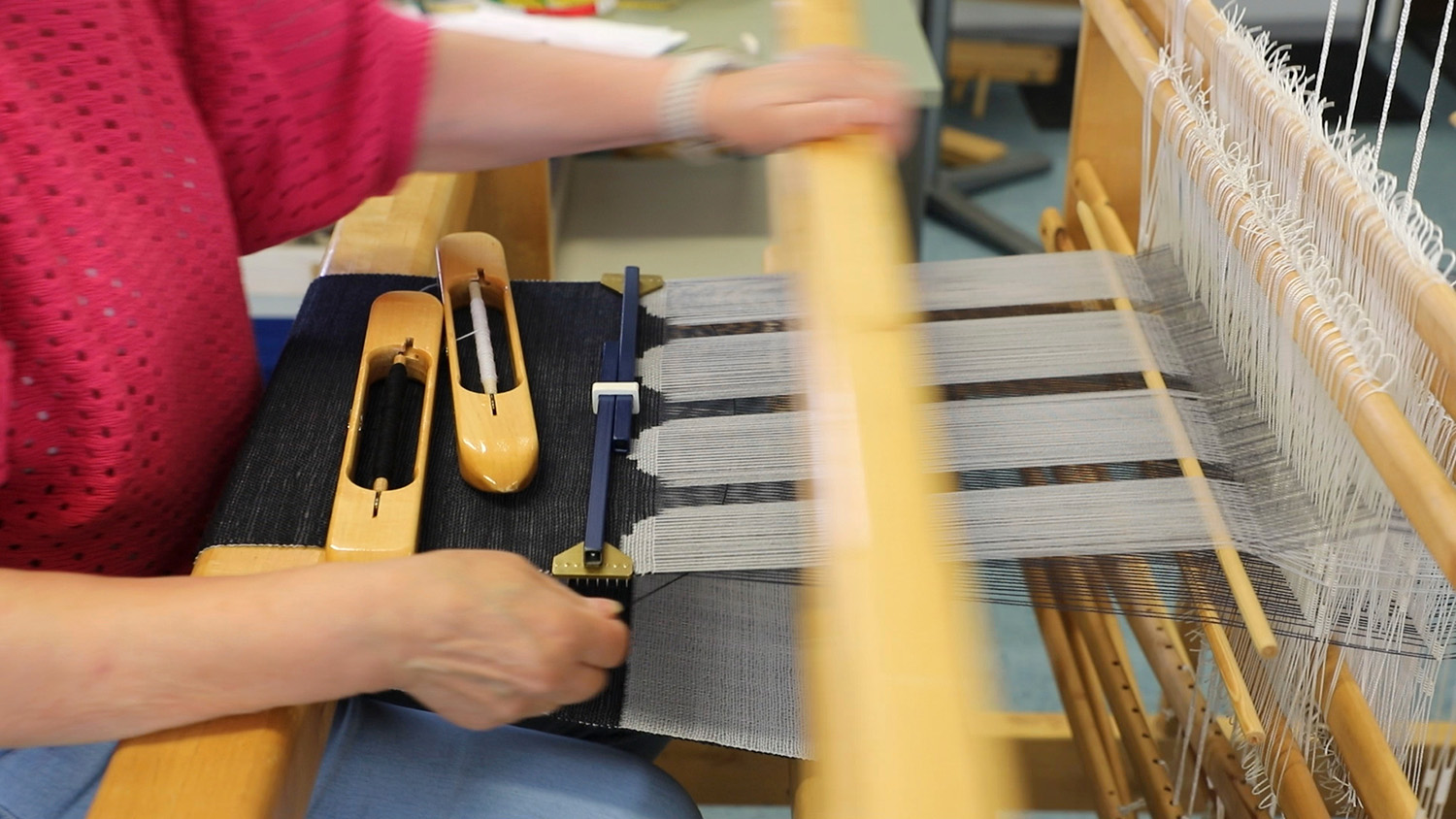
Weaving striped Finnish doubleweave (täkänä) is easy and quick. The only difference from an ordinary warp is in the tie-up, where some connections are left untied. You will also need a round rod that is longer than the width of the warp. Another similar rod is needed when picking up patterns.
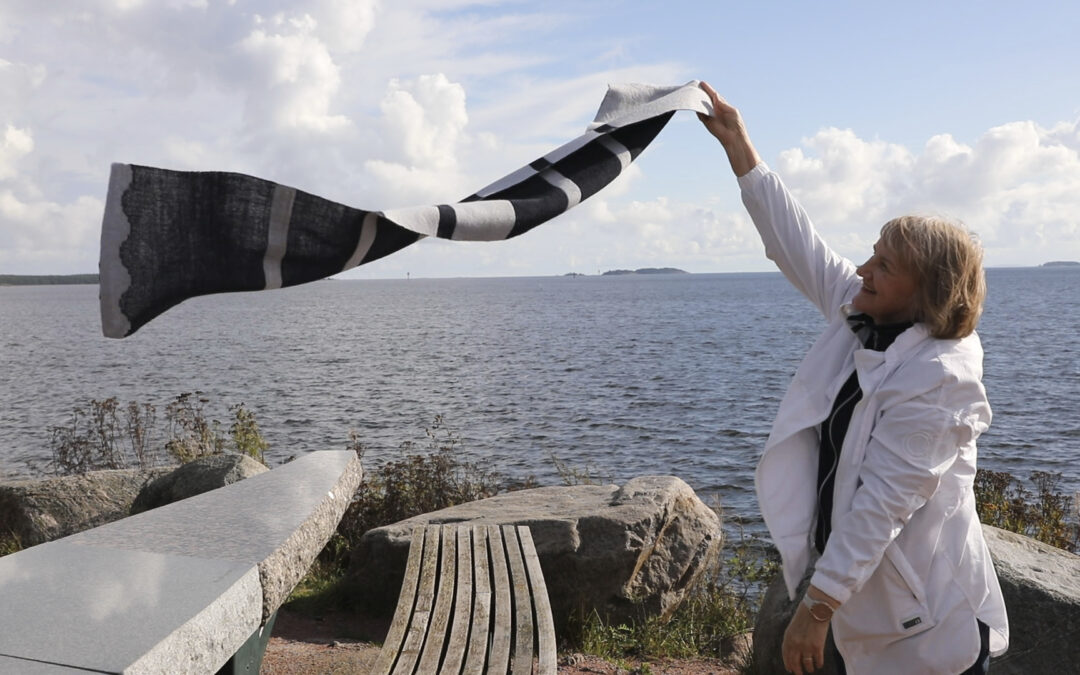
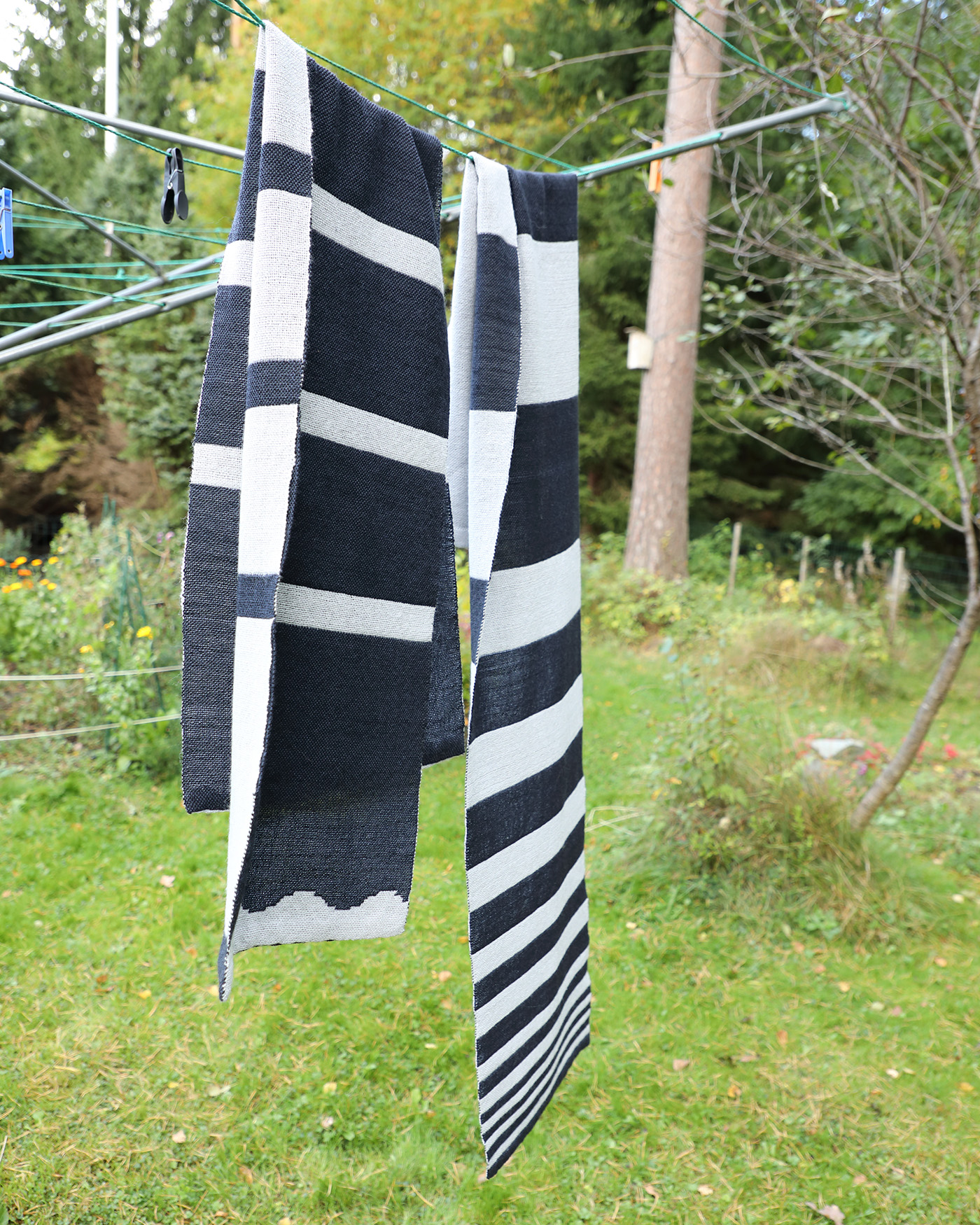
When the scarf is wrapped around the neck, the stripes of different colors form interesting checks and other patterns. Stripes alone are therefore more than enough. In doubleweave, the stripes can be woven in clear, solid colors, unlike ordinary woven fabric, where the warp and weft colors blend together.
– Once you have set up the doubleweave warp, you can also try creating patterns using pick-up technique.
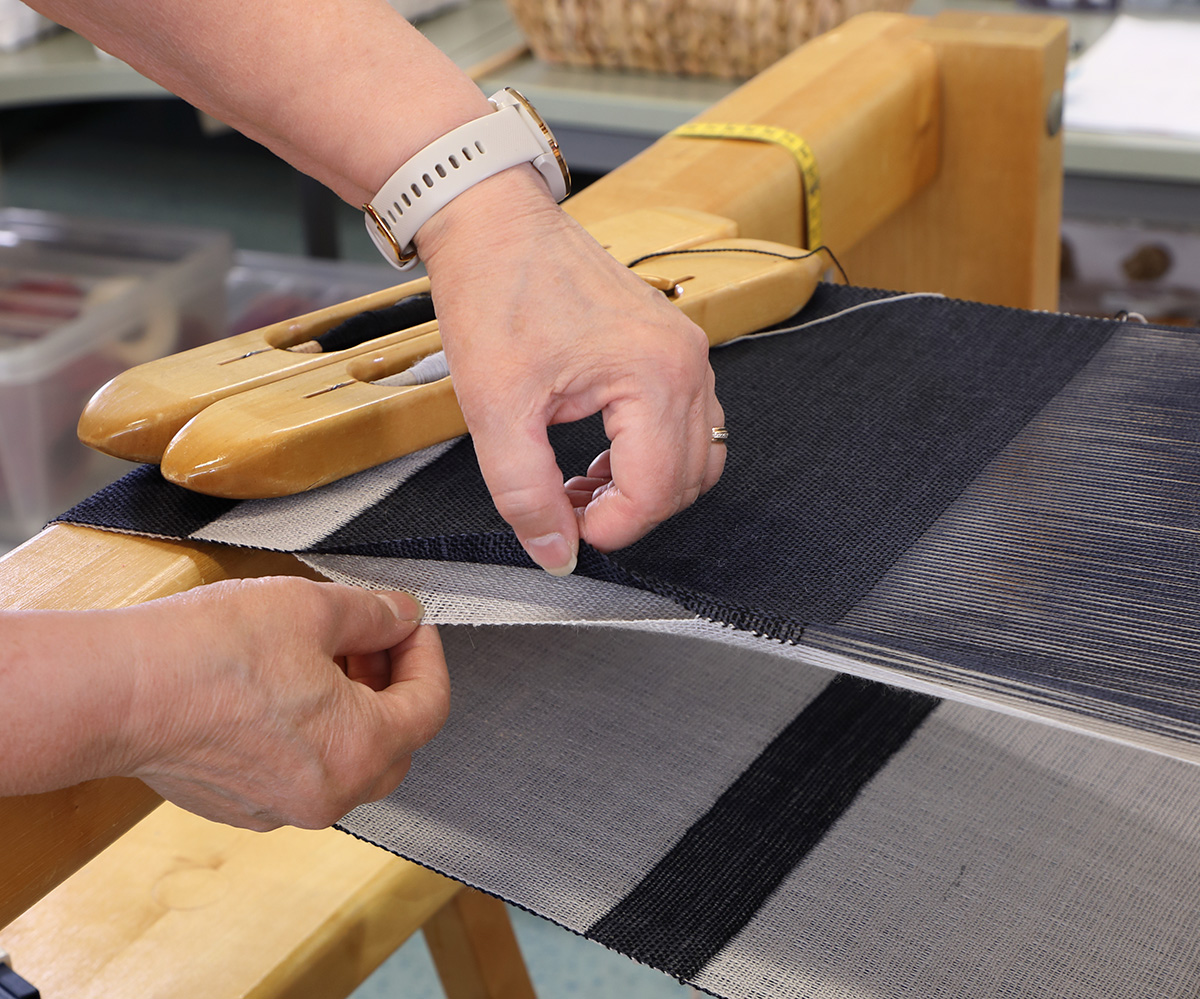
Doubleweave consists of two layers of fabric. The layers are joined at the selvedges when you twist the weft yarns of the upper and lower layers around each other. The edges remain open if you do not twist the weft yarns of the two layers around each other.
Striped Doubleweave
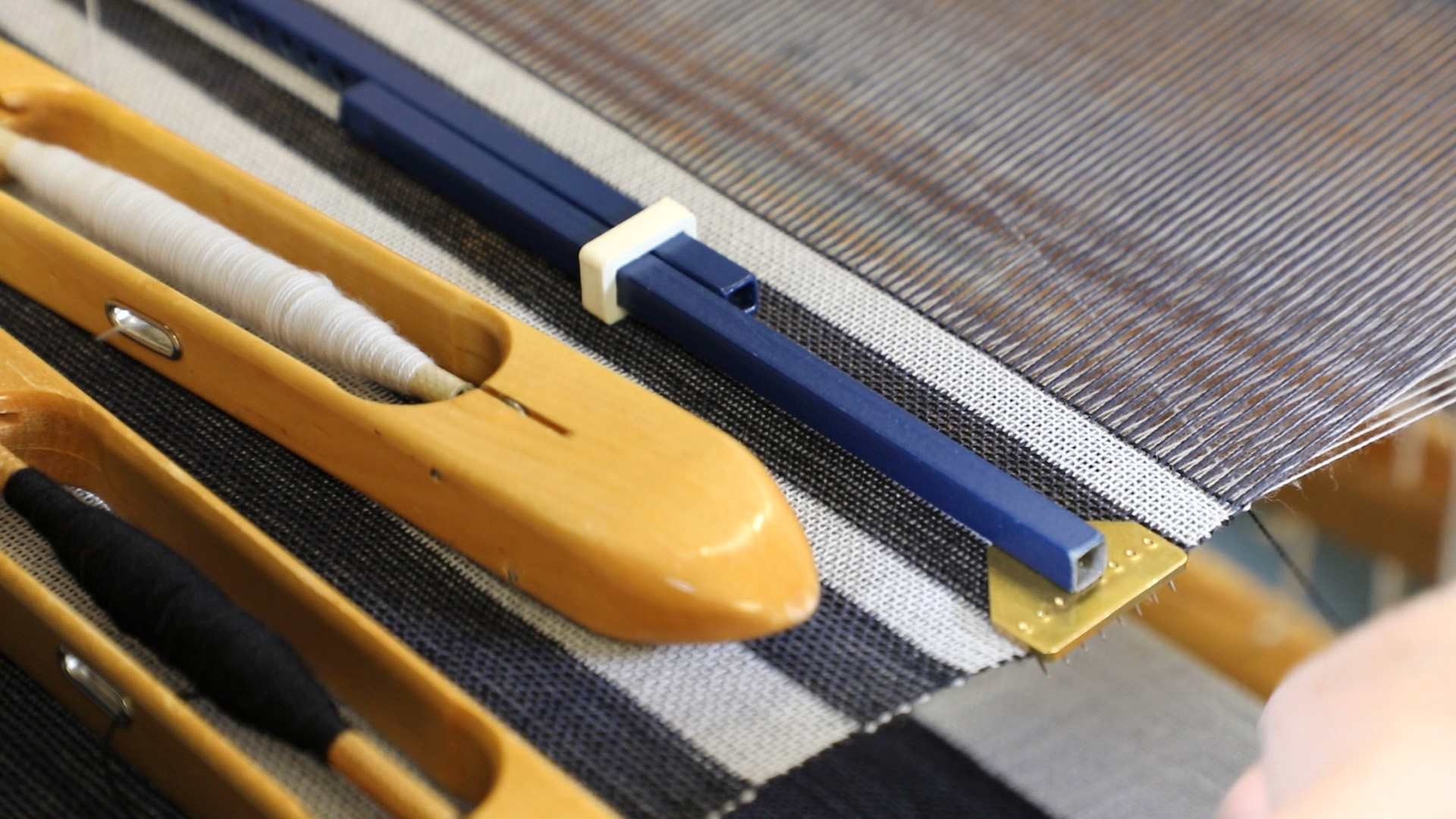
Weave with the light-colored layer on top for the desired width of the stripe. Then switch to the dark-colored layer on top and weave a dark stripe, and so on.
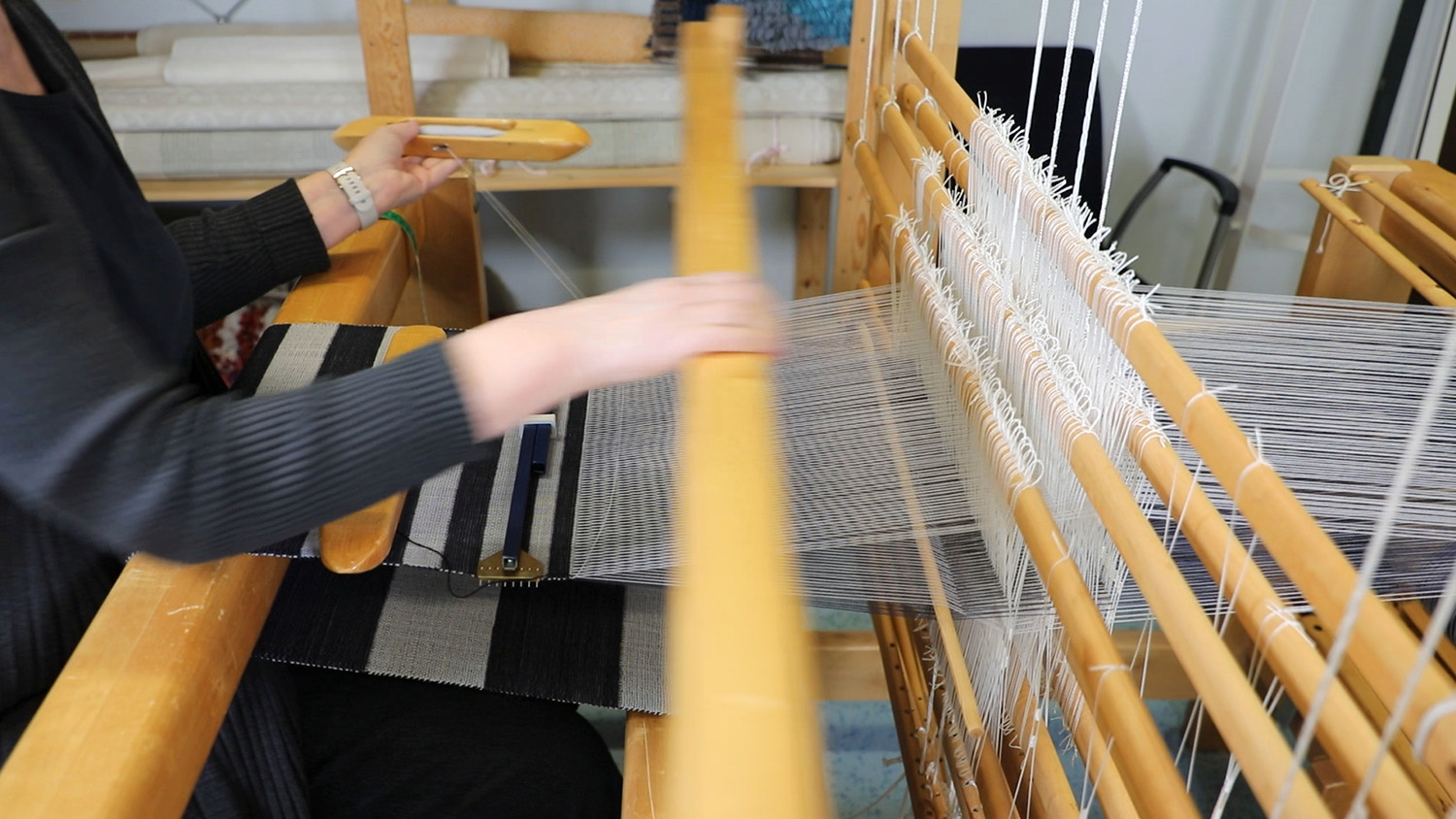
How to Weave Two Layers of Fabric on a Countermarch Floor Loom
When you want to weave with the light-colored layer on top, press treadle 1 and insert a rod into the shed behind the reed. The light-colored warp threads will remain above the rod and the dark-colored threads below it.
– Press treadle 3 and throw a pick of light-colored weft. – Press treadle 4 and throw the second pick for the light-colored layer. – Press treadle 5 and throw a pick of dark-colored weft. – Press treadle 6 and throw the second pick for the dark-colored layer.
Notice that the sheds for the dark-colored layer open below the light-colored warp threads.
Repeat from the beginning. The light-colored layer will be on top, and the dark-colored layer will remain underneath.
When weaving this way, the weft sequence is 2:2, meaning that two picks are woven in the upper layer, followed by two picks in the lower layer.
The wefts can also be woven in a 1:1 sequence, alternating one pick in the upper layer with one pick in the lower layer. The scarves shown in the photographs were woven using a 1:1 weft sequence.
LIGHT-COLORED LAYER ON TOP AND DARK-COLORED LAYER UNDERNEATH
Press treadle 1 to raise the light-colored warp threads and lower the dark-colored warp threads. Insert a rod into the shed behind the reed.
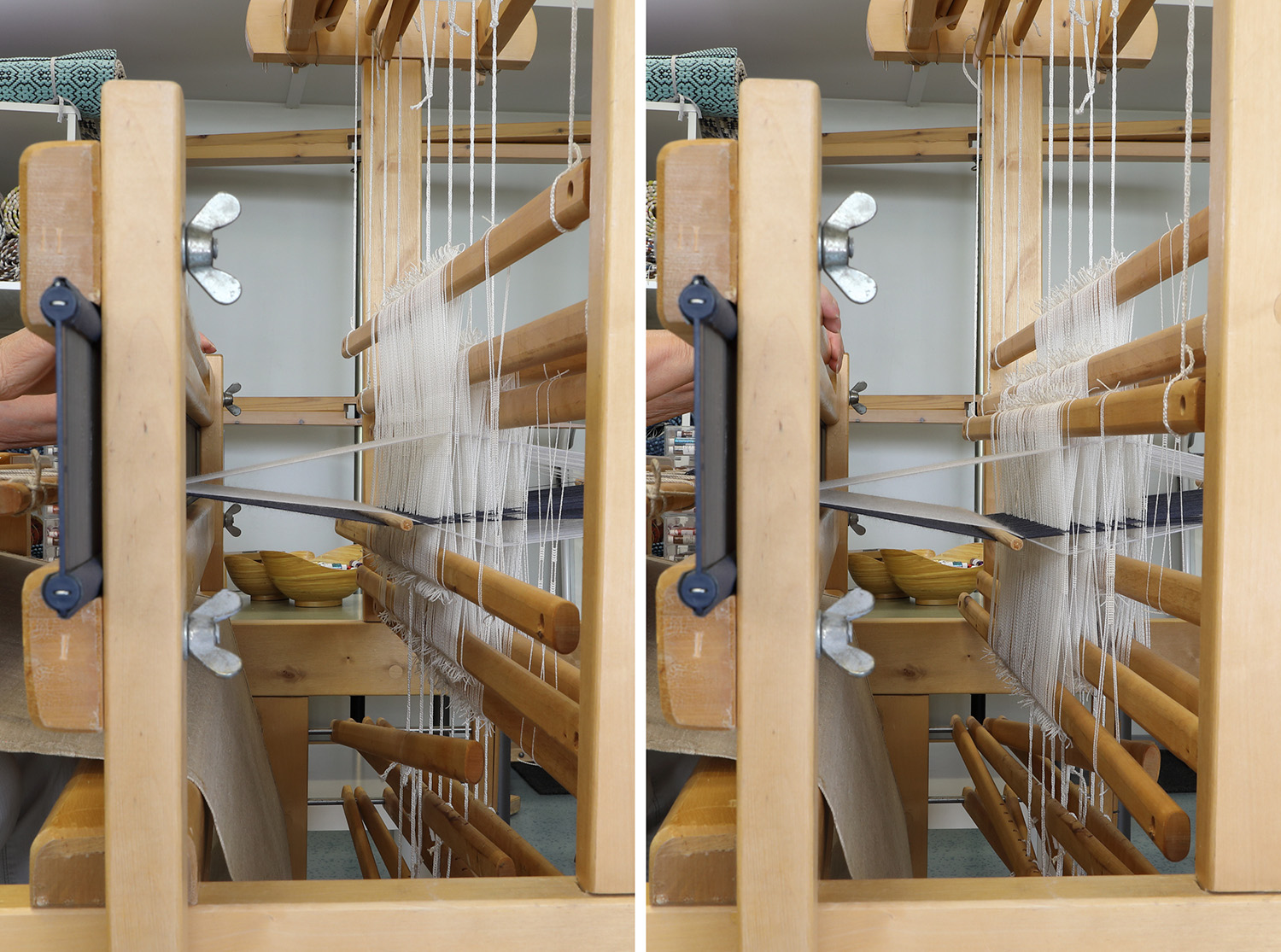
Shed 1: Press treadle 3 and throw the first light-colored plain weave pick into the shed of the light-colored layer.
Shed 2: Press treadle 4 and throw the second light-colored plain weave pick into the shed of the light-colored layer.
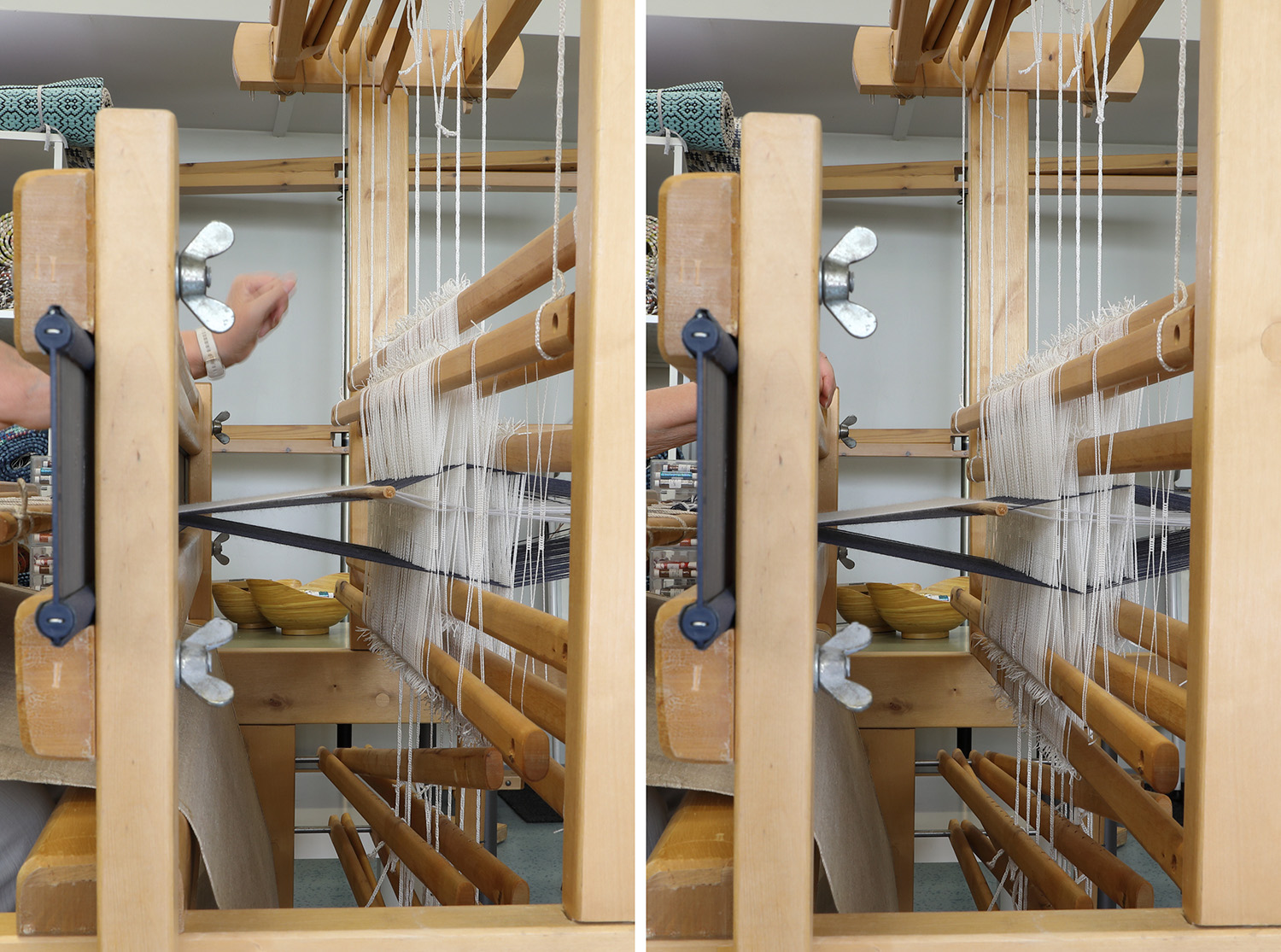
Shed 3: Throw the first dark-colored plain weave pick into the shed of the dark-colored layer.
Shed 4: Throw the second dark-colored plain weave pick into the shed of the dark-colored layer.

When you want to weave with the dark-colored layer on top, press treadle 2 and insert a rod into the shed behind the reed. The dark-colored warp threads will remain above the rod and the light-colored threads below it.
– Press treadle 5 and throw a pick of dark-colored weft. – Press treadle 6 and throw the second pick for the dark-colored layer. – Press treadle 3 and throw a pick of light-colored weft. – Press treadle 4 and throw the second pick for the light-colored layer.
Notice that the sheds for the light-colored layer open below the dark-colored warp threads.
Repeat from the beginning. The dark-colored layer will be on top, and the light-colored layer will remain underneath.
When weaving this way, the weft sequence is 2:2, meaning that two picks are woven in the upper layer, followed by two picks in the lower layer.
DARK-COLORED LAYER ON TOP AND LIGHT-COLORED LAYER UNDERNEATH
Press treadle 2 to raise the dark-colored warp threads and lower the light-colored warp threads. Insert a rod into the shed behind the reed.
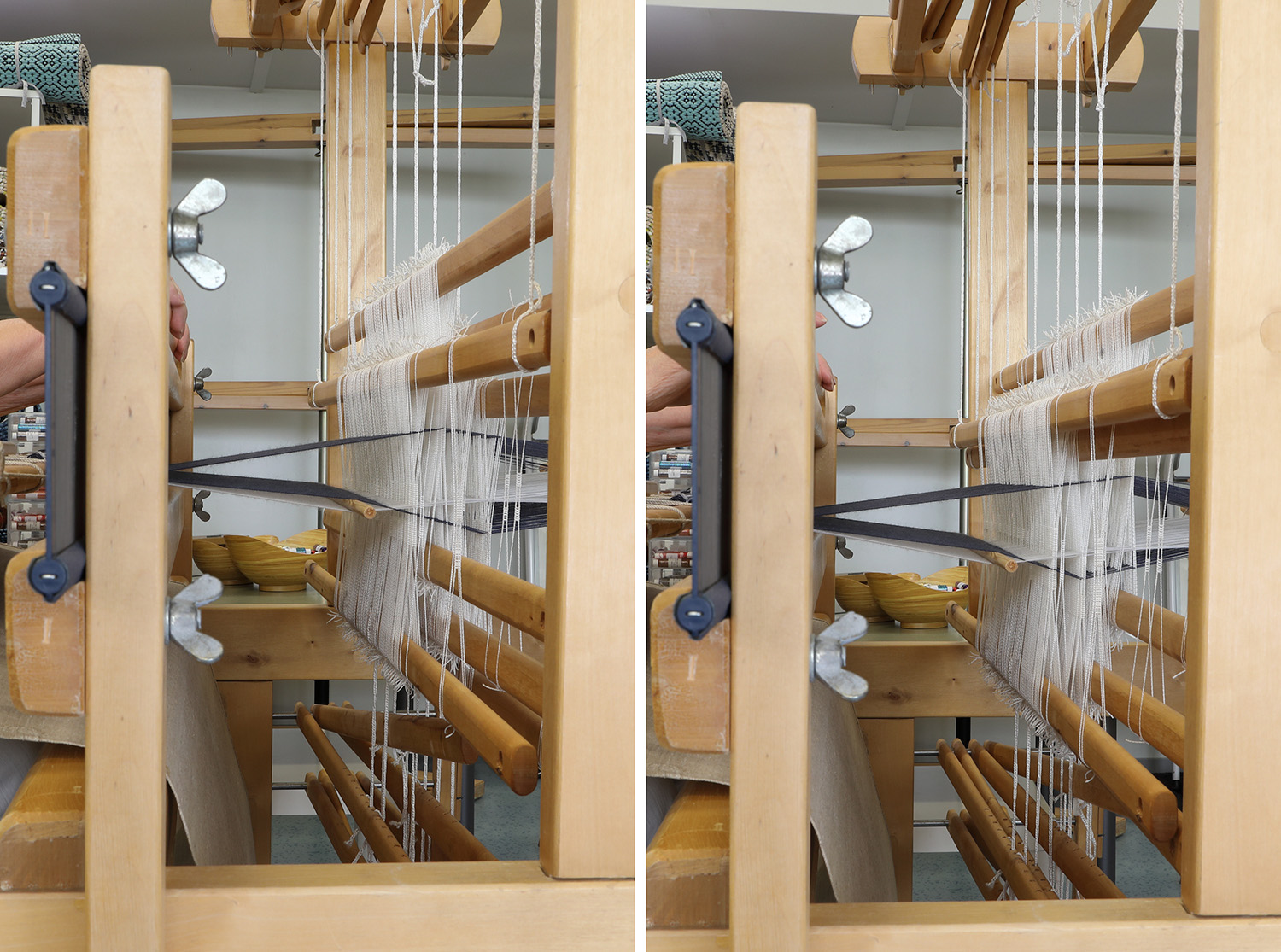
Shed 1: Press treadle 5 and throw the first dark-colored plain weave pick into the shed of the dark-colored layer.
Shed 2: Press treadle 6 and throw the second dark-colored plain weave pick into the shed of the dark-colored layer.
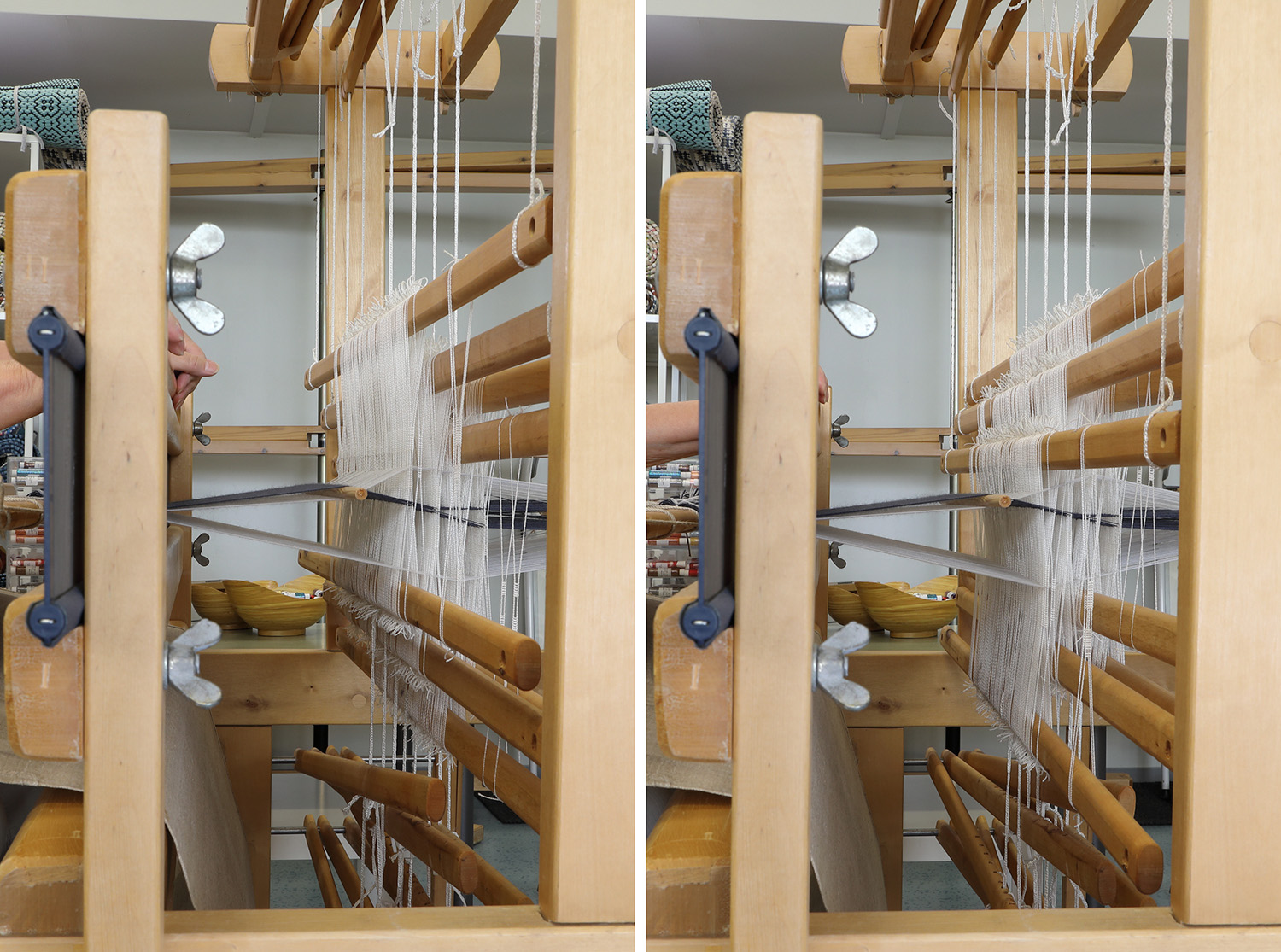
Shed 3: Press treadle 3 and throw the first light-colored plain weave pick into the shed of the light-colored layer.
Shed 4: Press treadle 4 and throw the second light-colored plain weave pick into the shed of the light-colored layer.
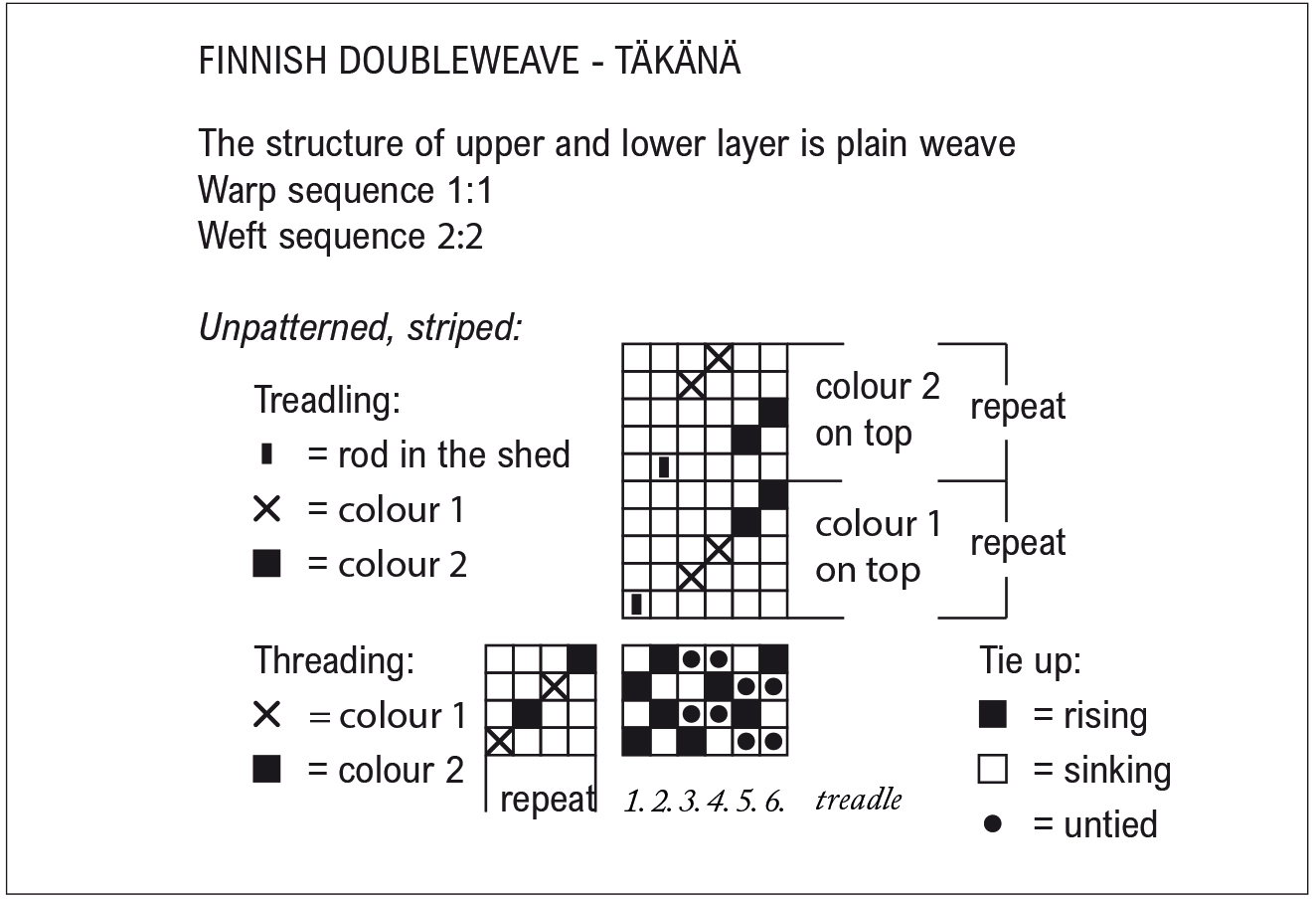
In the weaving draft, color 1 represents the light-colored layer and color 2 the dark-colored layer.
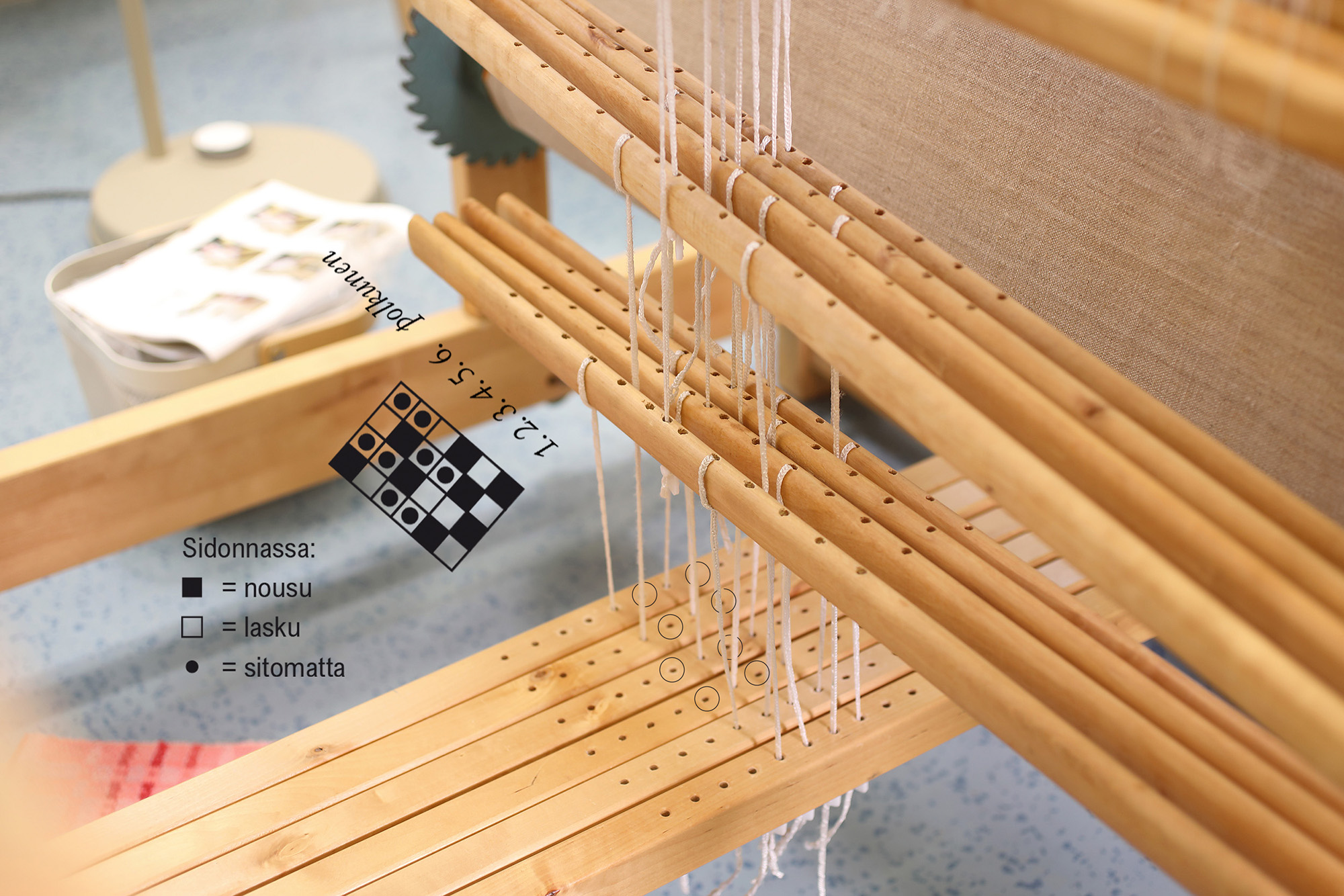
In the tie-up, some positions are left completely untied, with no cord connecting the treadle to the lam. These positions are marked with dots in the tie-up diagram, and the corresponding positions on the treadles are circled in the photograph.

Patterned Finnish Doubleweave on a Countermarch Floor Loom
The patterns in Finnish doubleweave (täkänä) are formed by two layers of fabric woven one above the other. The layers exchange positions at the boundaries of the picked-up pattern. When the two layers are different colors, they create a clearly defined pattern. Both layers are usually woven in plain weave.
HOW ARE THE POSITIONS OF THE TWO LAYERS REVERSED?
The pattern is picked up using two rods. With the first rod, the warp threads of the first layer are picked up and raised above the second layer according to the pattern. With the second rod, the remaining warp threads of the first layer are lowered beneath the second layer.
The warp threads of the second layer, which remain between these two groups, can then form sheds into which the weft is inserted.
Next, the warp threads of the second layer are picked up and positioned above and below the first layer. The warp threads of the first layer remaining between them can then form sheds into which the weft is inserted.
In this method, two consecutive picks are woven in one layer, followed by two picks in the other layer, giving a weft sequence of 2:2.
The wefts can also be inserted alternately into the two layers, but in that case, the shed for each pick must be picked up separately.
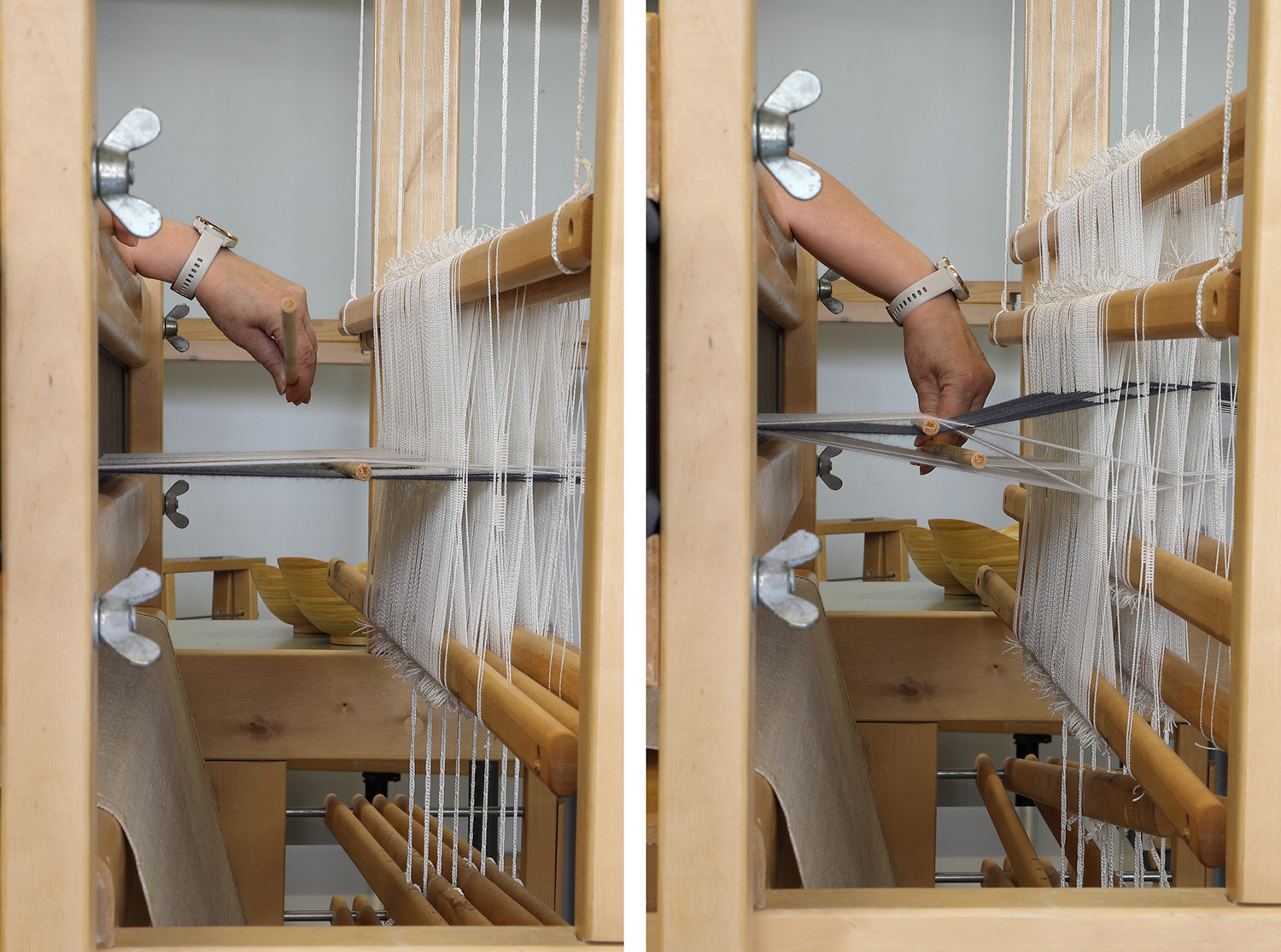
Pick up the pattern in the light-colored warp threads. Press treadle 1 and pick up the pattern from the raised light-colored warp threads in front of the reed. Transfer the pick-up to a second rod behind the reed. Press treadle 2 to lower the light-colored warp threads that are not included in the pattern, and secure them with the other rod beneath the warp threads of the ground layer remaining in the middle.
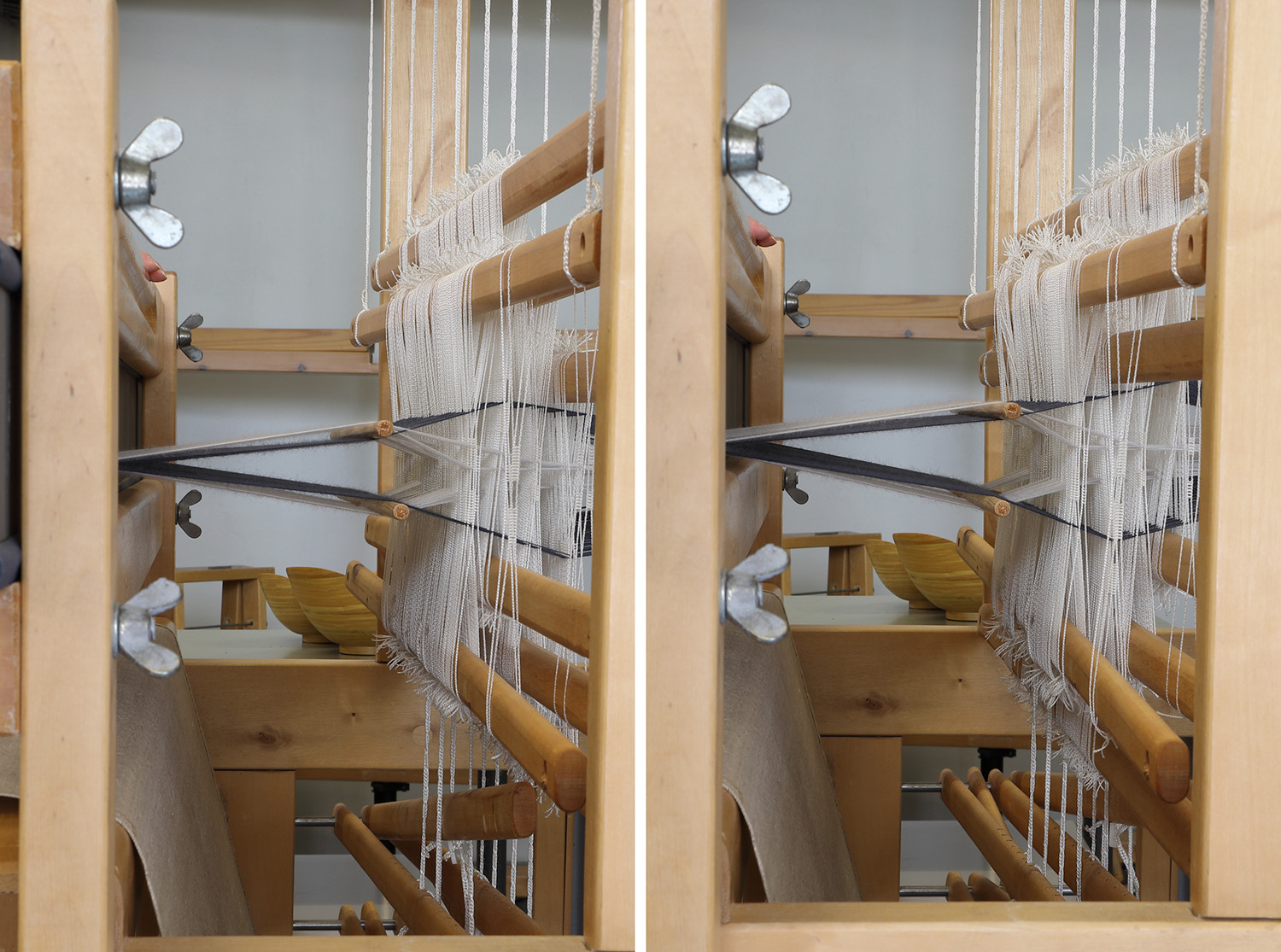
Weave the dark-colored layer. Use treadles 5 and 6 to insert the weft picks into the dark-colored layer.
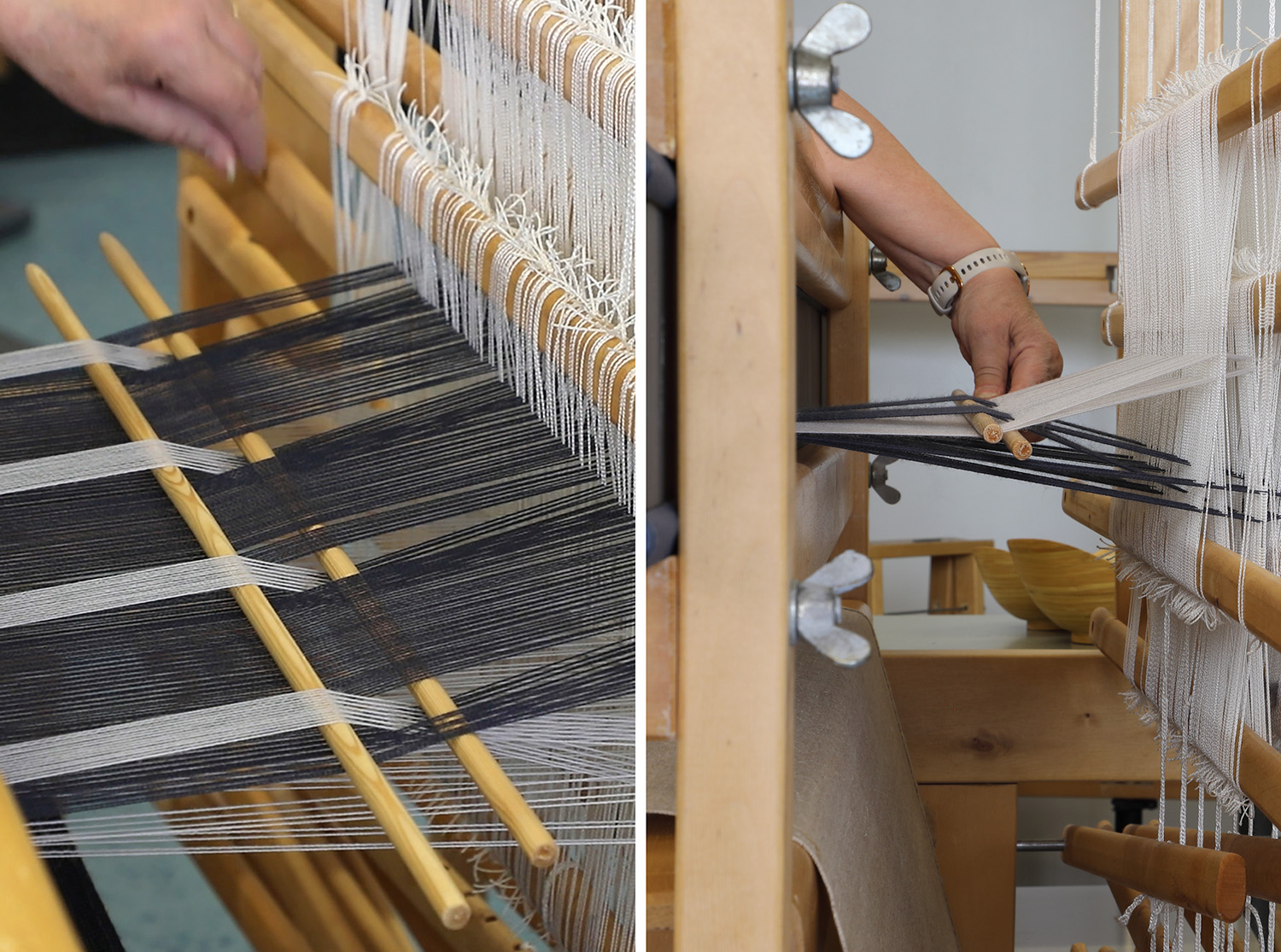
Pick up the dark-colored warp threads, using the previous pick-up as a guide, in front of the shafts. Remove the lower rod. The light-colored warp threads originally picked up in front of the reed remain on the upper rod.
Keep treadle 2 depressed and use a rod to pick up the raised dark-colored warp threads between the light-colored warp threads, in front of the shafts. The photograph shows the completed pick-up.
Remove the first rod so that only the dark-colored warp threads of the ground layer remain on the other rod.
Press treadle 1 to lower the dark-colored warp threads that were not picked up onto the rod. Secure them beneath the light-colored warp threads remaining in the middle by inserting the rod into the shed formed underneath.
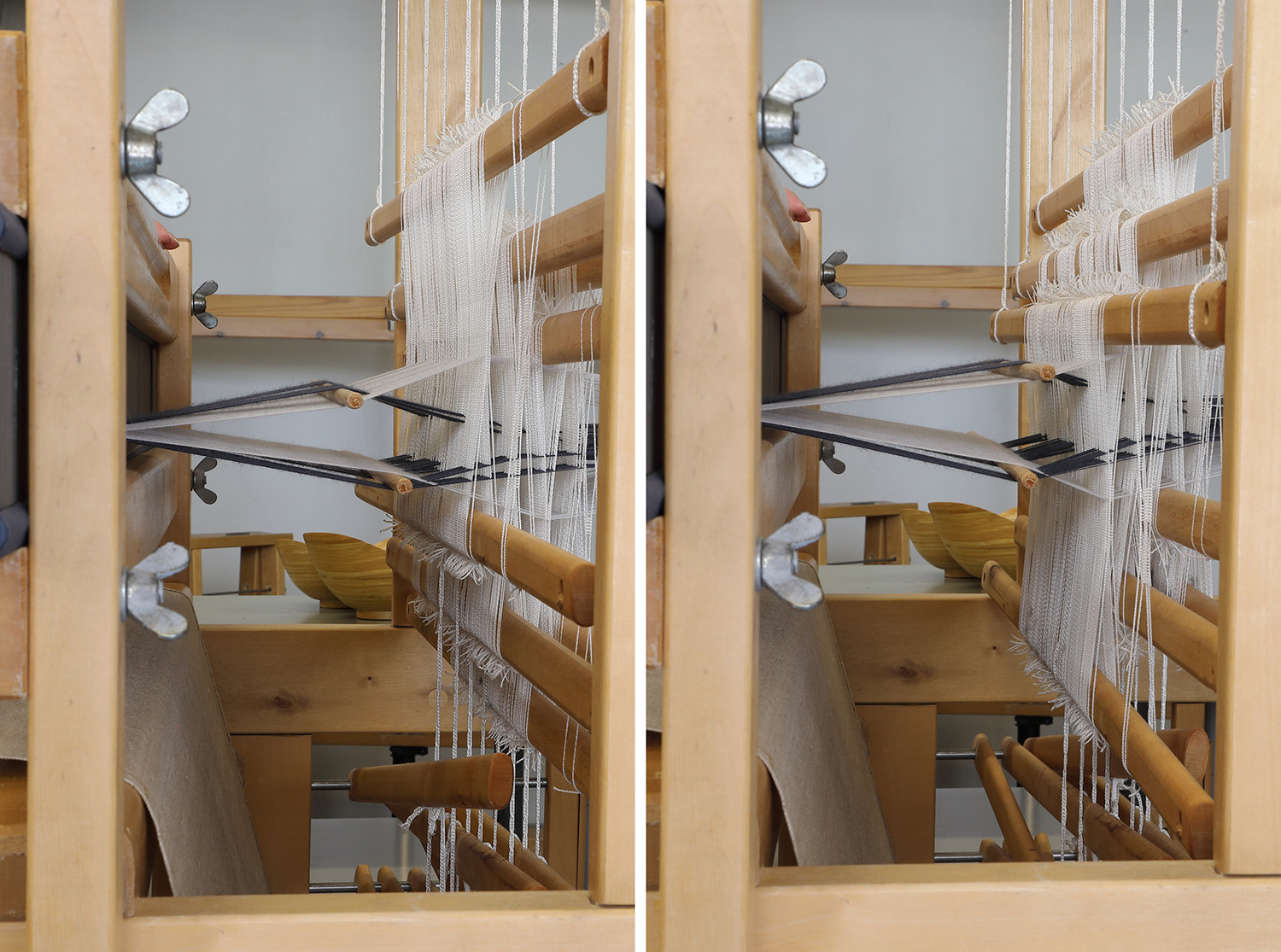
Weave the light-colored layer. Use treadles 3 and 4 to insert the weft picks into the light-colored layer.
Remove the rods and pick up the next row of the pattern.
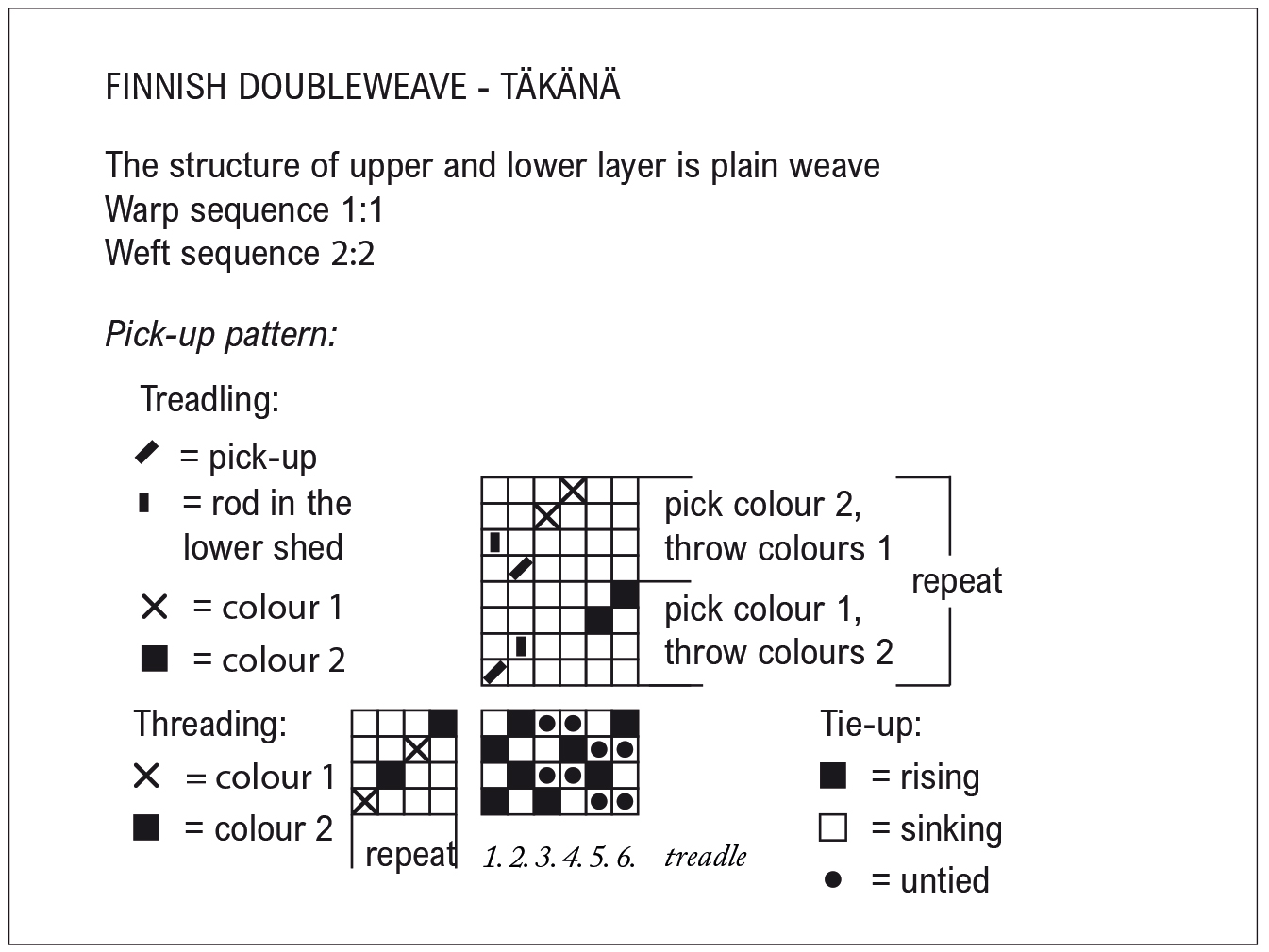
In the weaving draft, color 1 represents the light-colored layer and color 2 the dark-colored layer.
More instructions are available on the Projects page.
How to Make Pick-Up Sticks
MATERIALS AND TOOLS
-
Round wooden dowel rod, 0.8–1 cm in diameter. Available from the hardware departments of supermarkets and hardware stores.
-
Knife and sandpaper.
INSTRUCTIONS
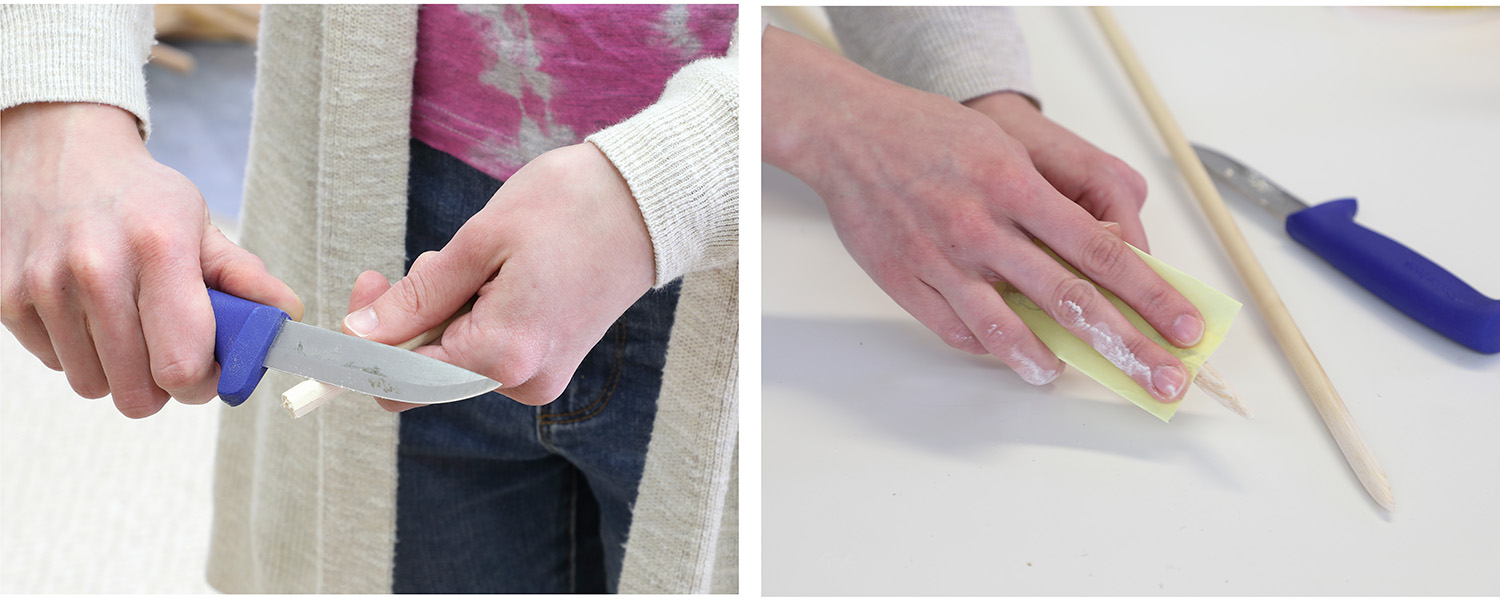
Cut the wooden dowel rod to a suitable length. Make the stick about 20 cm longer than the width of the warp, so that approximately 10 cm extends beyond each selvedge when picking up the warp threads.
Carve one end of the stick into a point. Sand the pointed end smooth and round off the tip slightly. Sand the entire stick to make sure it is smooth. You will need two pick-up sticks for patterned double weave (täkänä).
Consider whether you might need longer or shorter sticks for future projects. The same pick-up sticks can also be used for other pick-up weaving techniques, such as lace pick-up and Karelian red pick-up weaving.
It is a good idea to make several pick-up sticks at the same time.